Presenters: Taye Hallock, Makhari Dysart, Hannah Wells
Description:
This session provides a foundational understanding of trauma and its impact on people with intellectual and developmental disabilities and mental health needs (IDD-MH), as well as the professionals and caregivers who support them. Participants will explore trauma-informed approaches that emphasize accessible, collaborative, and intersectional practices, and how adopting trauma-informed practices fosters safer, more inclusive environments. We will discuss practical strategies such as peer support and reflexive supervision that draw on real-world examples and encourage participants to explore applications in their own context for building and sustaining interdisciplinary, trauma-informed teams.
Objectives:
- Define trauma and recognize the impact of trauma on people with IDD-MH and professionals and caregivers who support them
- Describe trauma-informed approaches, with a focus on systems-level collaborative and intersectional practices
- Identify practical, team-based strategies to foster a trauma-informed team culture
Taye Hallock, MSW
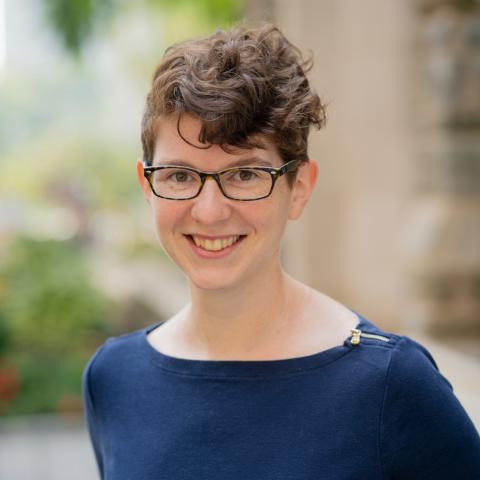
Taye Hallock oversees the IOD's health-related programs, including Covid-19, sexual health, and food justice initiatives. She has experience addressing barriers in access to care and services for people with disabilities and their families as a social worker, and she has worked on several community engaged research projects aimed at improving health outcomes for youth with disabilities. Her current research focuses on improving healthcare access for LGBTQ people with IDD and building capacity for survivors with IDD to engage in healing centered research. Taye earned her master’s degree in social work at Gallaudet University and is pursuing her doctorate in Social and Behavioral Sciences at Temple University.
Makhari Dysart, BA
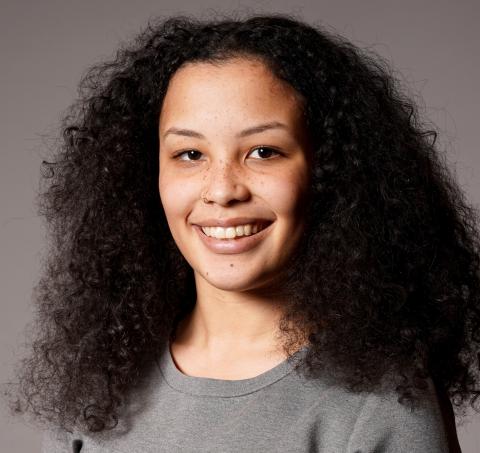
is responsible for creating programs that highlight the diversity of perspectives in the disabled community. While completing her education at the University of Pennsylvania, Makhari worked in both research and advocacy for several universities and non-profit organizations with a focus on policy, writing, and community engagement. Her experience in health equity ranges from advocating for greater inclusion of disability justice principles to documenting the adverse health effects of socioeconomic marginalization, leading to policy change for historically excluded communities.
Hannah Wells, MS
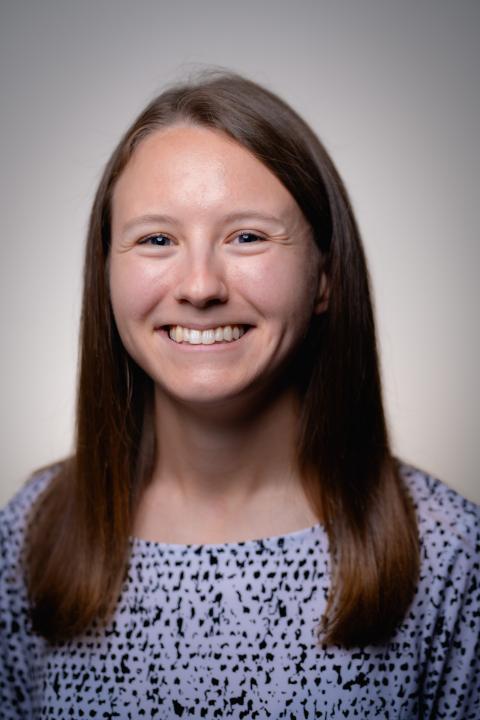
Hannah Wells has worked with adults experiencing significant mental health challenges and substance use disorders, as well as folks with Intellectual and Developmental Disabilities. Hannah received her master’s degree in Parks, Recreation, and Tourism Management with a focus on Recreational Therapy from Clemson University.
This event is part of the National Online Training Series and is available by subscription from the National Center for START Services®. Each month, the NOTS includes a pre-recorded presentation and a live Q&A session with presenters, available to subscribers only. You must be subscribed to our list to receive the recording and access the live Q&A.
How to subscribe: Current START programs are automatically subscribed. Many individuals can access the NOTS for free by partnering with their local START program. If you or your agency are interested in subscribing, please fill out this training interest survey. A member of our training department will connect with you for next steps.
Accommodation Requests: It is our goal to make the NOTS live Q&A accessible for all. CART services will be provided for every live Q&A and does not require an accommodation request. Should you have additional accommodation requests, please complete this form and we will make every reasonable effort to meet that request. Someone from NCSS will contact you about the status of your request.
Disclaimer: Speakers and presenters participating in sessions are encouraged to express their findings, experiences, and conclusions on specific topics. They are selected for their areas of expertise and personal and professional knowledge. Therefore, points of view or opinions of our speakers and presenters do not officially represent the National Center for START Services®, the Institute on Disability, or the University of New Hampshire.

