August 1, 2025- July 31, 2026
The NH Disability and Health Program (NH DHP) focuses on seven strategies identified by our funder, the Centers for Disease Control and Prevention. This Year 5 summary reports on the program activities from August 1, 2025, through July 31, 2026, organized by strategy.
DHAWG meetings

DHAWG members with disabilities


Collaborating across 10 states to advance disability and health
NH DHP continued collaborating with the other nine CDC-funded disability and health state programs to share lessons learned and strengthen collective impact. Key cross-state activities included:
- DHP hosted quarterly Evidence-Based Intervention Workgroup meetings, bringing together all 10 state programs to discuss implementation of Living Well in the Community, recruitment strategies, partnerships, and ways to expand program reach and impact.
- DHP staff participated in workgroups focused on educating healthcare providers through Responsive Practice and sharing outcomes from the health linkage demonstration program through collaborative manuscripts and national presentations.
- These collaborations supported the exchange of practical strategies, ideas, and lessons learned to help states implement and sustain disability and health initiatives.
Partnership Spotlight: New Hampshire Oral Health Coalition
Building momentum for inclusive oral health

Gail Brown, NH Oral Health Coalition Executive Director, and Emilia Poehlman at the ABLE Disability Pride Parade and Festival in July 2026.
NH DHP was invited by the New Hampshire Oral Health Coalition (NHOHC) to present at their annual forum during a session focused on expanding access to oral health care for people with disabilities. Moderated by ABLE-NH, the session provided an opportunity to share DHP’s online training and resources with a broad audience of oral health professionals and educators. The presentation led to the incorporation of DHP’s training into the NHTI dental hygiene student curriculum, helping strengthen disability inclusion and accessibility in the education of future oral health professionals.
DHP’s partnership with the New Hampshire Oral Health Coalition (NHOHC) also expanded through leadership opportunities. The DHP Program Director joined the NHOHC Steering Committee, followed by the DHP Program Manager joining the NHOHC Board of Directors. Through these roles, DHP has helped ensure that disability inclusion remains part of NHOHC’s ongoing priorities and initiatives. Participation in NHOHC leadership has also created opportunities to learn from other organizations, identify areas for collaboration, and stay informed about legislation and policy developments affecting oral health. Together, these efforts have strengthened the visibility of disability inclusion within New Hampshire’s oral health community while fostering partnerships, shared learning, and opportunities for systems-level impact.
Needs assessment

Milestones

Technical Assistance Requests Completed

What is a milestone? Progress toward addressing barriers, gaps, and needs as acknowledged in the 2022 health and wellness needs assessments. This groundwork, ideally, should lead to meaningful, sustainable Policy, System, and Environmental changes.
Building a clearer picture of mental health needs in New Hampshire
Over the past year, DHP partnered with a graduate student from the LEND (Leadership Education in Neurodevelopmental and Related Disabilities) Program to conduct a statewide needs assessment focused on mental health for people with disabilities in New Hampshire. This project has helped us better understand the experiences of individuals with disabilities and identify opportunities to strengthen mental health supports within the community. The needs assessment explores the importance of this work, provides background data, highlights the survey developed for this project, shares key findings, and examines the facilitators and barriers to mental health. It also includes resources and recommendations to help inform future efforts and support community well-being.
DHP is looking forward to continuing to disseminate the findings of this needs assessment and engaging with partners and community members as they explore opportunities to support the mental health and well-being of adults with disabilities in New Hampshire.
Spotlight: Northeast Passage PATH Program
NEP PATH program continues to support adults in the community
NH DHP is proud to continue its partnership with Northeast Passage (NEP), for a fifth year. This ongoing collaboration supports NEP to expand their community-based recreation therapy program, PATH. The PATH model improves access to home and community environments for adults with mobility disabilities, ultimately supporting better long-term health outcomes.
10
Individuals served

Visions for increased health and WELL-BEING

Recreational Therapy sessions




Responsive practice reaches participants across the country
In Year 5, a record number of participants completed the Responsive Practice modules, with learners from more than 40 states. The highest participation was in Massachusetts, Connecticut, New Hampshire, Colorado, North Carolina, and Florida. Many participants completed the training as a requirement for their health professions degree program. In New Hampshire, nursing students from the University of New Hampshire and Great Bay Community College took the training as part of their coursework.
Explore the maps below to see where Responsive Practice participants joined from across the United States.
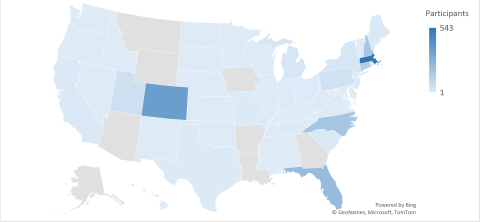
Map of Care and Screening module participants by state. Distribution of Responsive practice: Providing health care & screenings to individuals with disabilities participants by state during Year 5.
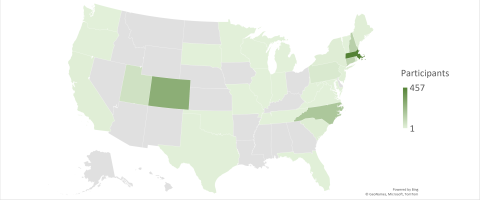
Map of the Communication module participants by state. Distribution of Responsive practice: Accessible & adaptive communication participants by state during Year 5.



Collaborative dissemination: Sharing impact and lessons learned
DHP worked closely with staff from the other nine disability and health states to identify lessons learned, outcomes, and collective impact from the health linkage demonstration project. This effort includes two in-progress manuscripts, two upcoming presentations at the American Public Health Association Annual Meeting in November, and one panel proposal for the Association of University Centers on Disabilities Annual Conference. Additionally, DHP submitted two presentation proposals to local conferences to share New Hampshire-specific impact with professionals in the public health, mental and behavioral health, and healthcare fields.



Building wellness and connection through community partnership
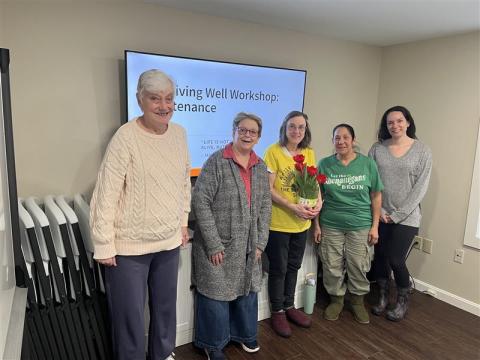
DHP partnered with the Exeter Parks and Recreation Department to host a 10-week Living Well in the Community (LWIC) workshop. Seven individuals enrolled in the program, with five participants completing the workshop. Throughout the 10 weeks, participants explored topics such as goal setting, physical activity, healthy communication, and strategies to improve overall health and well-being while working toward individualized wellness goals. By the end of the workshop, all participants reported either achieving their goal or making meaningful progress toward it.
Participants also highlighted the value of peer support and the opportunity to build new relationships throughout the workshop. Many shared that connecting with others, exchanging community resources, and learning practical strategies increased their confidence and engagement within their communities.
DHP is looking forward to continued work with the Exeter Park and Recreation Department and other senior centers to connect with community members.

Environmental changes


Using the NCHPAD project to make change at the YMCA
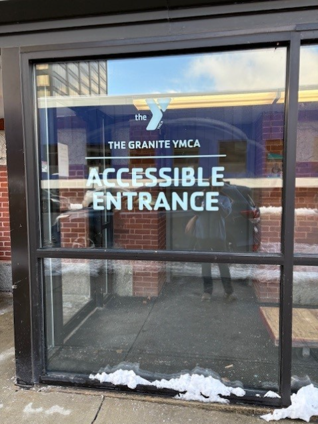
Accessible entrance at the Granite YMCA Manchester downtown branch
Over the past three years, the DHP team has worked with the Granite YMCA with support from the National Center on Health, Physical Activity and Disability to improve accessibility and inclusion. This project used the NCHPAD Inclusive Community Implementation Process (NiCIP) and was guided by an Inclusive Health Coalition (IHC) made up of people with disabilities and professionals from organizations including the Moore Center, Crotched Mountain Foundation, and AdaptX. Through the IHC efforts, the Granite YMCA made changes to ensure its programs and environments are more accessible and inclusive. This included adding a question to their membership form that allows new members to share if they need an accommodation to participate in Granite YMCA activities. The image below highlights a signage change at the accessible entrance at the Manchester downtown branch to ensure it is welcoming for all.



Presentation leads to new connection
In November, DHP staff traveled north to present “Engaging Disabled Voices: Accessible and Inclusive Community Engagement Strategies” at the North Country Public Health Conference. The presentation explored health disparities experienced by adults with disabilities in New Hampshire and provided practical strategies for recruiting people with disabilities to councils, advisory groups, and coalitions, as well as creating accessible communication and meeting practices.
The presentation also led to a new partnership opportunity. In the spring, the Director of Community Outreach and Engagement at Dartmouth Cancer Center contacted DHP after recognizing connections between our work and an obesity prevention initiative at Dartmouth. DHP participated in an interview to provide a disability perspective, which helped inform the project’s data collection, discussion questions, and development of potential solutions.
This collaboration led to an invitation for DHP to participate in a Health Forum hosted by Dartmouth Cancer Center. The forum brought together partners working to better understand obesity-related efforts and identify collaborative approaches to obesity prevention and cancer risk reduction.
This experience demonstrates how community presentations can extend the reach of DHP’s work, create meaningful new partnerships, and help ensure that disability perspectives are incorporated into broader public health initiatives.
Looking Ahead
Year 6 goals, objectives, and partnerships
- Partnerships: NH DHP will strengthen both new and existing partnerships by providing technical assistance that helps ensure programs and services are accessible and inclusive.
- Needs Assessment: NH DHP will update the statewide health and wellness needs assessments for New Hampshire adults with intellectual and developmental disabilities (IDD) and adults with mobility disabilities.
- Healthcare Provider Training: NH DHP will identify events and outreach opportunities to promote training among New Hampshire-based healthcare providers.
- Linkage: NH DHP will share outcomes, impact, and lessons learned from the health linkage demonstration project with the other nine federally funded disability and health state programs.
- Evidence-Based Intervention: NH DHP will collaborate with parks and recreation departments to offer Living Well in the Community workshops through senior programs.
- Strategies and Actions: NH DHP will continue building coalitions that support meaningful and sustainable policy, systems, and environmental changes in oral health, physical activity, and food security/nutrition.
- Dissemination: NH DHP staff will share lessons learned and outcomes from the past five years with local and national audiences.
Year 5 in Review
The DHP team had a productive year of meeting with partners, collaborating across the state, and sharing program successes. The following slideshow highlights some of our favorite memories from the past year. Use the left and right arrow keys on your keyboard, or the arrow buttons at the top of the slideshow, to move through the photos.
-

Hannah Pease, Megan Henly, and Emilia Poehlman at the American Public Health Annual Meeting in Washington DC.
-

Emilia Poehlman and Megan Henly table at the ABLE-NH Disability Pride Parade and Festival in Concord, NH.
-
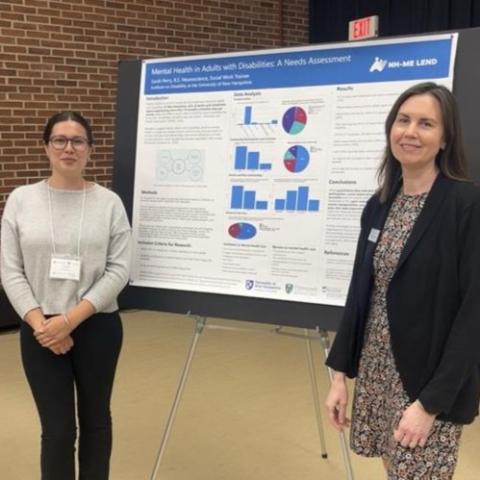
Megan Henly and Sarah Perry attend the LEND poster session.
-

Affirmation card from a Living Well in the Community participant at the Exeter Parks and Recreation workshop.
-
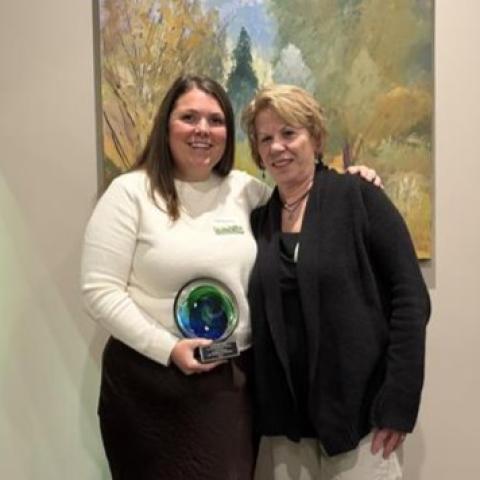
Emilia Poehlman and Cindy Lafond, Granite YMCA Executive Director of Health Interventions, at the Granite YMCA annual event in Manchester, NH.
-
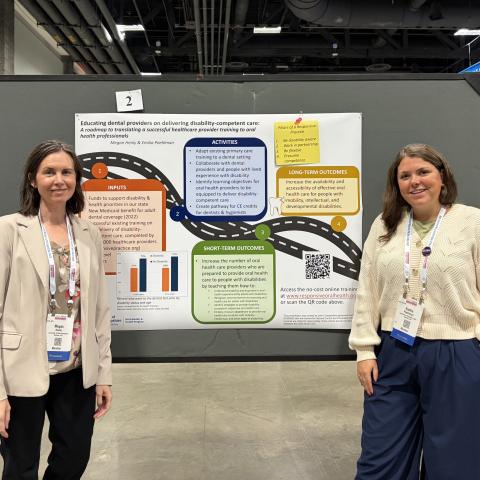
Megan Henly and Emilia Poehlman present at an APHA poster session in Washington DC.


Acknowledgements
This publication was supported by cooperative agreement number DD000025 with the U.S. Centers for Disease Control and Prevention (CDC). Its contents are solely the authors' responsibility and do not necessarily represent the views of CDC.
The program staff at the University of New Hampshire Institute on Disability (UNH IOD) gratefully acknowledge the many individuals, families, advocates, agencies, and organizations whose work has paved the way for current public health efforts, programs, and initiatives.
This summary was prepared by Emilia Poehlman, MSSW, Hannah Pease, MPP, and Megan Henly, PhD at the UNH IOD. Thanks to DHP’s Kathy Bates and Toni Sumner-Beebe for their input and contributions toward program activities. Design and website support were provided by Kate Filanoski-Russell. Thanks also to the Disability and Health Advisory Work Group who were active in Year 5:
- Jennifer Baker, NH Family Voices
- Emily Bird, NH Division of Public Health Services
- Carol Conforti-Adams, Sunset Hill Education Institute
- Kelly Ehrhart, Disability Advocate
- John Fenley, Disability Advocate
- Tiffany Gladu, Granite State Independent Living
- Cindy Lafond, Granite YMCA
- Kelly Main, NH Bureau of Developmental Services
- Jennifer McLaren, MD, Dartmouth-Hitchcock
- Martha McLeod, New Futures / New Hampshire Alliance for Healthy Aging
- Lisa Plotnik, MD, Dartmouth-Hitchcock
- Brittany Potvin, MPH, Disability Advocate
- Laura Remick, North Country Health Consortium
- Deb Ritcey, MPA/HA, Granite State Independent Living
- Isadora Rodriguez-Legendre, MSW, NH Council on Developmental Disabilities
- Bob Scholz, MS, LMHC, Center for START Services
- Valarie Tetreault, MAPP, Community Bridges
