Tawara D. Goode, MA
All mental health conditions are influenced by culture.1 Understanding and responding to the role of culture in mental health requires an expansive view, one that is not confined only to patients and their families.2 Applying a cultural lens or framework in mental health encompasses but is not limited to:
- The training and practices of all clinicians.
- Ongoing professional consensus on the classification of psychiatric diagnoses based on clinical expertise and research over time.
- Beliefs and practices about mental illness, mental health, and emotional well-being among the racial, ethnic, cultural, and other identity groups that reside in states, territories, and tribal nations.
- The lived experience of diverse populations in states, territories, and tribal nations and the socio-cultural and economic contexts in which they live.3
For over a half a century, the need to be responsive to the cultures, cultural identities, and languages of persons in need of health and mental health care are well documented in the literature. The first ever Surgeon General’s report on mental health issued in 1999 emphasized the importance of culture for both patients and providers.
“The cultures that patients come from shape their mental health and affect the types of mental health services they use. Likewise, the cultures of the clinician and the service system affect diagnosis, treatment, and the organization and financing of services.” 4
Culture and language are inextricably linked. Culture is encoded in language through forms of expression, communication preferences, and the way words are used. It is through language that a person can express thoughts, feelings, preferences, and comprehend others. Cultural and linguistic competence are essential areas of knowledge and skills for all mental health care practitioners. In caring for persons who have intellectual and developmental disabilities (IDD) and their families, clinicians must seek to understand:
- The unique cultural beliefs and practices about mental illness among individuals with IDD and their families
- People with IDD and their families’ conceptualizations of what causes mental illness or mental health conditions
- What constitutes well-being for individuals with IDD and their families
- What language and terms are used by individuals with IDD and their families to describe these conditions
- What interventions and treatment are culturally acceptable for treatment for individuals with IDD and their families
It also means understanding cultural differences that may exist between the diversity of people with IDD, their families, and the mental health professionals that provide treatment and care.
Cultural competence and linguistic competence are widely recognized by policy makers, researchers, health and mental healthcare practitioners, and educators as fundamental aspects of quality.2 Cultural and linguistic competence are viewed as essential approaches to reduce health and mental health disparities and promote equity by improving access, treatment and care, utilization, and outcomes.5, 6, 7 While the evidence supports the efficacy of these approaches, many health and mental health professionals continue to struggle to fully integrate knowledge and skills of cultural and linguistic competence in practice, including in their prescribing of medications for mental health conditions. While there is a substantial body of literature on cultural and linguistic competence in provision of mental health care, evidence-based practices specifically for persons with IDD across diverse racial, ethnic, cultural, and linguistic groups are still emerging.8, 9 This section of the guide will define cultural competence and linguistic competence and offer examples for mental health professionals to enhance the practice of prescribing psychiatric medications for this patient population.10
Definitions of Cultural Competence and Linguistic Competence
Cultural competence and linguistic competence, while closely related, are defined differently in literature and by statute, regulations, and guidelines. This guide will use the nationally and internationally recognized definitions of cultural competence adapted by Georgetown University National Center for Cultural Competence (NCCC) from the seminal work of Cross et al., Towards a Culturally Competent System of Care,11 and linguistic competence developed by National Center for Cultural Competence (NCCC) faculty as described in Figure 1.
Figure 1: Cultural and Linguistic Competence Definitions7
Cultural competence requires that organizations establish a defined set of values and principles and demonstrate behaviors, attitudes, policies, and structures that enable them to work effectively cross-culturally. Culturally competent organizations have the capacity to (1) value diversity, (2) conduct self-assessment, (3) manage the dynamics of difference, (4) acquire and integrate cultural knowledge, and (5) adapt to the diversity and cultural contexts of the populations and communities served. Cultural competence in a developmental process evolves over an extended time period. Both individuals and organizations are at various levels of awareness, knowledge, and skill along this continuum.
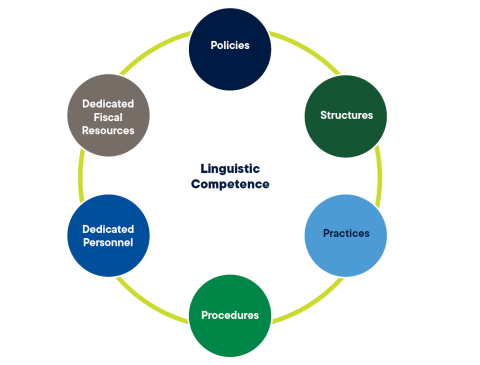
Linguistic competence is the capacity of an organization and its personnel to communicate effectively and convey information in a manner that is easily understood by diverse groups including persons of limited English proficiency, those who have low literacy skill or are not literate, individuals with disabilities, and those who are deaf or hard of hearing. Linguistic competence requires organizational and provider capacity to respond effectively to the health and mental health literacy needs of populations served. The organization must have policy, structures, procedures, and dedicated resources to support this capacity.
Currently available data do not provide the exact number of persons with IDD in the U.S. It can be deduced that persons with IDD are clearly representative within the demographic groups in Figure 2.12-15 It is impossible to know the cultures and languages of every person with IDD and their families that present for care in any given mental care setting. It is possible to use best and promising practices that demonstrate competencies in understanding and responding to culture and language to improve diagnostic accuracy, treatment planning, and ultimately the desired outcomes of treatment. Cultural competence and linguistic competence exist at both individual and organizational levels.
Figure 2: Cultural Competence Conceptual Framework16
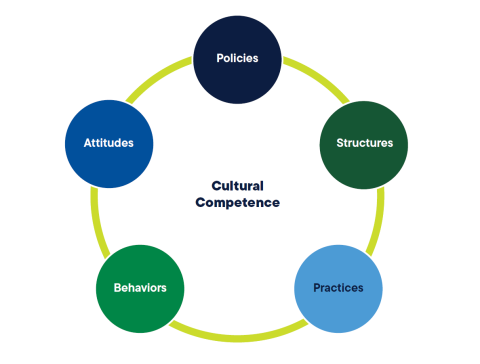
Table 1: Five Elements of Individual Cultural Competence Adapted for IDD-MH Practitioners16
| Element | Description |
|---|---|
| Acknowledge Cultural Differences |
|
| Understand Your Own Culture |
|
| Engage is Self-Assessment |
|
| Acquire Cultural Knowledge and Skills |
|
| View Behavior Within a Cultural Context |
|
Consistent with the definition of linguistic competence presented in this guide, in addition to translation and interpretation services, providing treatment to persons with IDD requires other accommodations. This may include and is not limited to: ASL and other sign languages; information in plain language such as oral, written, graphic, pictorial, and easy-to-read formats; augmentative and alternative communication (AAC); braille and low vision technologies; and computer-assisted technologies. Linguistic competence also requires consideration of mental health literacy, numeracy literacy, computer literacy, and financial literacy as routine aspects of your practice.
Figure 3: Linguistic Competence Framework17
Selected Excerpts from NCCC’s Cultural and Linguistic Competence Checklist Series
I provide all information about the patient’s mental health in a manner that is easy to understand and takes literacy and mental health literacy into consideration:
- During face-to-face verbal interactions.
- When using video or telehealth platforms.
- In the electronic health record.
- In written documents.
- I use language that acknowledges and respects the person’s experience of disability.
- I routinely use bilingual or certified interpreters to ensure quality assessment and treatment.
- I adhere to language access requirements as mandated by statute, standards, and practices within the context of my role and responsibilities as a mental health care provider (See additional resources links for laws and guidelines on language assess)
- I always keep in mind when interacting with family members or caretakers who have limited English proficiency that:
- Limitations in English proficiency are in no way a reflection of their cognitive functioning.
- Limited ability to speak the language of the dominant culture has no bearing on their ability to communicate effectively in their first language.
- They may or may not be literate in their language of origin or in English.
Reflection Questions
- Culture influences every aspect of life and defines identity as humans. In what ways does this affect people with IDD?
- To what extent do I consider intersectionality in diagnosis and treatment?
- How would you define cultural competence? How does this definition affect the way you provide treatment to people with IDD?
- How will you apply the five elements of cultural competence in your mental health practice?
- How do you consider the definition of linguistic competence, as presented in this guide, in assessment, diagnosis, and treatment?
- How will current and projected demographic changes affect the mental health care you provide to people with IDD?
- To what extent do you participate in ongoing education on mental health disparities affecting people with IDD and effective strategies to address them at the individual and organizational levels?
Additional Resources
Hogg Foundation for Mental Health Policy Recommendations
Title VI, Section 601, Civil Rights Act of 1964 (P.L. 88-352)
National Standards for Culturally and Linguistically Appropriate Service in Health and Health Care
CLAS Behavioral Health Implementation Guide, Report, and Toolkit
References
- Ogundare T. Culture and mental health: towards cultural competence in mental health delivery. J Health Soc Sci. 2020;5(1):023-034. doi:10.19204/2019/cltr6.
- Rice AN, Harris SC. Issues of cultural competence in mental health care. J Am Pharm Assoc (2003). 2021;61(1): e65-e68. doi: 10.1016/j.japh.2020.10.015. Epub 2020 Nov 5. PMID: 33160868.
- U.S. Department of Health and Human Services. Mental health: a report of the Surgeon General—Executive summary. Rockville, MD: U.S. Department of Health and Human Services, Substance Abuse and Mental Health Services Administration, Center for Mental Health Services, National Institutes of Health, National Institute of Mental Health; 1999.
- U.S. Department of Health and Human Services, Office of Minority Health. National standards for culturally and linguistically appropriate services in health and health care: a blueprint for advancing and sustaining CLAS policy and practice. 2013.
- Flynn PM, Betancourt H, Emerson ND, Nunez EI, Nance CM. Health professional cultural competence reduces the psychological and behavioral impact of negative healthcare encounters. Cult Divers Ethnic Minor Psychol. 2020;26(3):271-279. doi:10.1037/cdp0000295.
- Maness LR, McCauley GA. Reducing health disparities through an education rich in cultural competence and service. J Best Pract Health Prof Divers. 2020;13(1):66-77.
- Pinals DA, Hovermale L, Mauch D, Anacker L. Persons with intellectual and developmental disabilities in the mental health system: Part 1. Clinical considerations. Psychiatr Serv. 2022;73(3):313-320. doi: 10.1176/appi.ps.201900504. Epub 2021 Aug 4. PMID: 34346730.
- Rice AN, Harris SC. Issues of cultural competence in mental health care. J Am Pharm Assoc (2003). 2021;61(1): e65-e68. doi: 10.1016/j.japh.2020.10.015. Epub 2020 Nov 5. PMID: 33160868.
- McGregor B, Belton A, Henry TL, Wrenn G, Holden KB. Improving behavioral health equity through cultural competence training of health care providers. Ethn Dis. 2019;29(Suppl 2):359-364. doi:10.18865/ed.29.S2.359. PMID: 31308606; PMCID: PMC6604769.
- Cross TL, Bazron BJ, Dennis KW, Issacs MR. Toward a culturally competent system of care. Washington, DC: Georgetown University Child Development Center; 1989.
- Goode T, Jones W, Brown IJ. Responding to cultural and linguistic differences among people with intellectual disability. In: Percy M, Wehmeyer ML, Shogren KA, Fung A, eds. A comprehensive guide to intellectual and developmental disabilities. 2nd ed. Baltimore, MD: Brookes Publishing; 2017:389-400.
- Goode TD. Cultural Competence Continuum. National Center for Cultural Competence, Georgetown University Center for Child and Human Development, University Center for Excellence in Developmental Disabilities; Revised 2004.
- Goode T, Jones W, Brown IJ. Responding to cultural and linguistic differences among people with intellectual disability. In: Percy M, Wehmeyer ML, Shogren KA, Fung A, eds. A comprehensive guide to intellectual and developmental disabilities. 2nd ed. Baltimore, MD: Brookes Publishing; 2017:389-400.
- Havercamp SM, Krahn GL, Larson SA, Fujiura G, Goode TD, Kornblau BL, National Health Surveillance for IDD Workgroup. Identifying people with intellectual and developmental disabilities in national population surveys. Intellect Dev Disabil. 2019;57(5):376-389.
- Havercamp SM, Krahn GL, Larson SA, Weeks JD, National Health Surveillance for IDD Workgroup. Working through the ISS data conundrum: identifying people with intellectual and developmental disabilities in national population surveys. Washington, DC: Administration on Intellectual and Developmental Disabilities; 2019.
- Goode TD. Cultural Competence Continuum. National Center for Cultural Competence, Georgetown University Center for Child and Human Development, University Center for Excellence in Developmental Disabilities; Revised 2004.
- Goode T, Jones W, Brown IJ. Responding to cultural and linguistic differences among people with intellectual disability. In: Percy M, Wehmeyer ML, Shogren KA, Fung A, eds. A comprehensive guide to intellectual and developmental disabilities. 2nd ed. Baltimore, MD: Brookes Publishing; 2017:389-400.
