Using Knowledge Translation Strategies to Advance Community Life Engagement
Authors: Daria Domin, Jennifer Sullivan Sulewski, Jaimie Ciulla Timmons, and Kelly Doran
Community life engagement (CLE) refers to people with and without disabilities accessing and participating in their communities outside of employment as part of a meaningful day. Supporting CLE as an outcome is vital because it addresses the widespread problem of social isolation and limited community participation among people with intellectual and/or developmental disabilities (IDD) (Emerson et al., 2021). Despite federal policies like the Medicaid Home and Community-Based Services Final Rule, which makes CLE an essential outcome of disability support (Centers for Medicare and Medicaid Services, 2014), many services remain facility-based and segregated (Winsor et al., 2022). In response to the urgent need to move away from segregated facilities, our team has been conducting research and creating research-based tools for service providers for over two decades.
The Community Life Engagement in Action project is designed to equip service providers with research-based content on CLE and offer practical applications for its use. Using a Knowledge-to-Action framework (Graham et al., 2006), we aim to create an active and interactive process between researchers and users to promote evidence-informed decision-making, meaningful use of the CLE toolkit, and lasting change.
To bridge the gap between research and practice, the CLE in Action project employs three integrated knowledge translation (KT) strategies:
- A national Community of Practice on CLE where providers learn strategies from subject matter experts and from each other
- A quarterly webinar series focused on individual and provider storytelling and illustrating simple practices
- A monthly newsletter that promotes awareness and application of CLE principles
This brief shares how the application of these three KT strategies can strengthen the use of evidence in practice, expand audience reach, and foster sustained engagement with target users. It is designed for KT professionals who are interested in how to adopt and use research-based information.
The Community Life Engagement Toolkit
The CLE Toolkit (ICI at UMass Boston, n.d.) is a linchpin of our knowledge translation strategies for CLE. This toolkit translates years of research into a practical, user-friendly tool that service providers can apply to enhance CLE outcomes of those they support. The toolkit provides access to national CLE data and findings, helping providers make informed, evidence-based decisions.
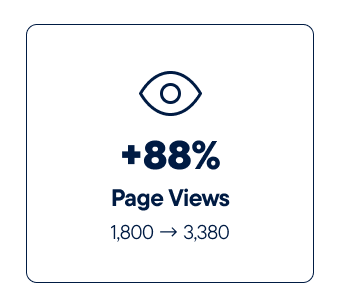
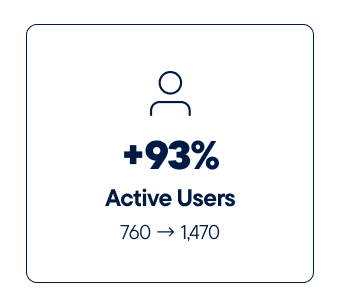
As part of the CLE in Action project, we have redesigned and relaunched the CLE Toolkit to make it more user-friendly and engaging. We have also been promoting the redesigned toolkit through social media, newsletters, tabling, conference presentations, and the three CLE in Action KT activities described in this publication. This outreach is reflected in increased engagement in Google Analytics data, with site usage nearly doubling after the toolkit relaunch.
CLE Toolkit relaunch takeaways
Engagement more than doubled in the six months following the launch.
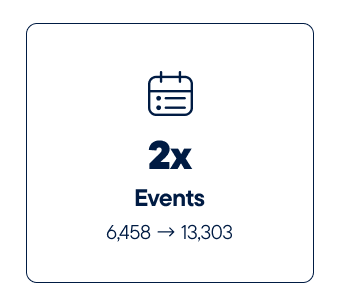
Events = Number of user interactions with a website.
Active users = Number of unique people who engaged with the website.
Page views = The total number of times pages on the site were viewed.
Findings
Since the project’s inception, CLE in Action staff have focused on expanding our audience, monitoring engagement, and measuring the reach and effectiveness of our KT strategies. Here are our findings for each of the strategies:
National Community of Practice
The National Community of Practice (CoP) on Community Life Engagement (CLE) shares knowledge from CLE subject-matter experts and toolkit authors and offers a venue for peer learning and connection. Our CoP uses the evidence-based Project ECHO model, with its “All Teach, All Learn” approach, to foster effective engagement and learning.
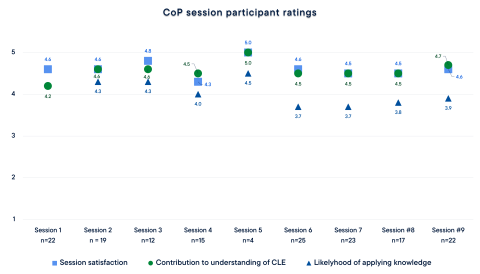
In Year 1 of the CLE CoP, we engaged 58 participants across 15 service providers in nine states, with promising initial results. In post-session surveys, participants consistently reported being satisfied with each CoP session and having greater knowledge of each session's topic after the meeting (see Chart 1).
Furthermore, applications to the CoP increased from 19 in Year 1 to 26 in Year 2, a 37% rise. This growth may indicate a growing interest in learning about and applying CLE principles in the field.
Takeaway: The Community of Practice sessions were consistently highly rated
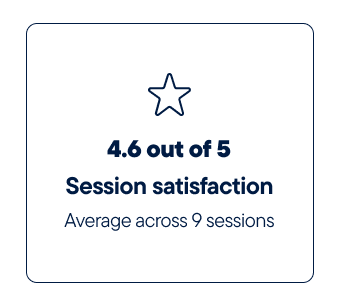
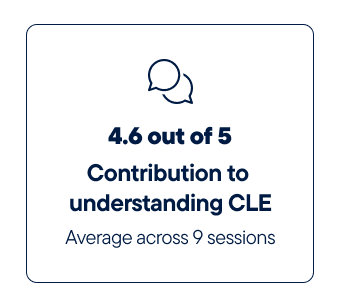
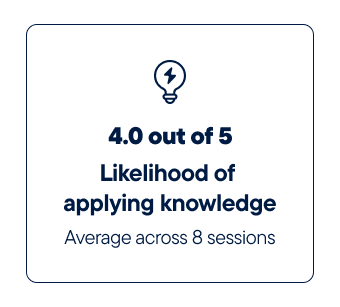
Chart 1: Community of Practice Session Feedback
Session | Number of Participants (n) | Session satisfaction | Contribution to the understanding of CLE | Likelyhood of applying knowledge |
|---|---|---|---|---|
Session 1 | 22 | 4.6 | 4.2 |
|
Session 2 | 19 | 4.6 | 4.6 | 4.3 |
Session 3 | 12 | 4.8 | 4.6 | 4.3 |
Session 4 | 15 | 4.3 | 4.5 | 4.0 |
Session 5 | 4 | 5.0 | 5.0 | 4.5 |
Session 6 | 25 | 4.6 | 4.5 | 3.7 |
Session 7 | 23 | 4.5 | 4.5 | 3.7 |
Session 8 | 17 | 4.5 | 4.5 | 3.8 |
Session 9 | 22 | 4.6 | 4.7 | 3.9 |
Quarterly Webinars
Webinars have been an additional avenue for reaching and engaging providers. The webinar series was scheduled as a half-hour lunchtime session to fit into service providers’ busy schedules. We used a storytelling approach (West et al., 2022) to share practical strategies and real-world examples for promoting CLE outcomes. Initial topics included an introduction to the CLE Toolkit, person-centered tools like One-Page Profiles, approaches to shifting from “disability stories” to “community stories,” and supporting mental health through inclusive, engagement-focused communities. We share webinar recordings through newsletters, social media, and on the project website, allowing non-attendees to access the content, further extending the project’s reach and engagement.
In post-session feedback surveys, webinar participants gave consistently positive ratings of the content, clarity, and likelihood to recommend (see Figure 3).
Figure 3: Webinar Feedback
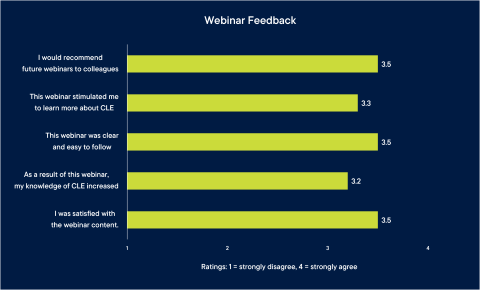
95 responses total.
Monthly Newsletter
CLE in Action has successfully expanded the project's reach and broadened its audience through targeted email outreach. The CLE in Action News, the project’s dedicated monthly newsletter, uses micro-learning strategies (Buchem & Hamelmann, 2010) to present new and existing content to potential users in a digestible format. Each newsletter is between 300 and 500 words and has no more than one or two feature items, plus brief updates on upcoming project activities such as webinars and CoP recruitment.
The newsletter subscription has grown from 15 subscribers in May 2024 to 406 as of October 2025. From February to September 2025, the CLE in Action News achieved an average open rate of 40%, double the industry average of 20%. Engagement metrics show an average click-through rate (CTR) of 6.44% and a click-to-open ratio (CTOR) of 16.81%, indicating strong reader interaction with the content. CTR = total number of links clicked across all of the emails sent. CTOR = links clicked by people who opened the email.
Leveraging the Reach of Project Partners
CLE in Action has leveraged the large audiences of project partners whose followers are already engaged in community and employment issues for people with IDD. We share key project announcements via ICI’s national e-news (7,683 subscribers), ANCOR’s Weekly Updates (9,982 subscribers), and IOD’s News and Notes and IOD Engage (6,846 subscribers). Project updates, micro-learning content, webinar announcements, and conference presentations are also posted to each organization’s social media channels, with a combined reach of over 35,000 subscribers on LinkedIn, X (Twitter), Facebook, and Instagram. Using these platforms broadens CLE in Action’s audience and expands the reach of CLE content.
7,683
ICI’s national e-news subscribers
9,982
ANCOR’s Weekly Updates subscribers
6,846
IOD Engage subscribers
Recommendations for KT Professionals
Based on lessons learned from the CLE in Action project, KT professionals can consider 1) creating a holistic KT agenda, 2) monitoring participant engagement and quality of the strategy, and 3) engaging a range of diverse stakeholders, including researchers, practitioners, and people with IDD.
1: Create a Holistic KT Agenda
We designed multiple complementary strategies to create a holistic KT agenda. Although each KT strategy was intended for a slightly different audience and purpose, participants could benefit from any of the three without much duplication. For example, the CoP was designed for providers who were already invested in the concept of CLE for the people they served. They received hands-on, concrete strategies for service delivery from subject-matter experts, provider mentors who are already doing the work, and each other across a peer learning platform designed to create connections. The CoP offered a deep dive into the content and included presentations and group problem-solving. The quarterly webinar series was designed for the busy service delivery professional who could listen to simplified content focused on storytelling from people with IDD, their families, and the provider staff who support them. These webinars were designed to offer real-world stories with key takeaways and are open to the public, providing a lighter-touch engagement with a broader audience. Finally, the monthly newsletter was designed to reach the largest and most diverse audiences and reinforce knowledge through micro-learning content.
2: Monitor Engagement and Quality
We tracked engagement metrics and audience feedback to assess effectiveness and to inform continuous improvement. During monthly CoPs, project staff recorded attendance and monitored engagement to ensure we were hearing from most attendees rather than a select few. We administered surveys at the start and end of the year-long CoP to understand the impact of participation on knowledge and practice at the providers’ organizations. Webinar evaluations proved useful in determining satisfaction with the duration, format, and content of the webinars.
3: Collaborate with Researchers, Practitioners, People with IDD, and Others
Strong KT strategies include the perspectives of subject-matter experts from a variety of disciplines. While the project team ensured the content remained aligned with foundational knowledge emerging from research, practitioners on the CLE in Action team ensured it was relevant, practical, and sustainable in real-world settings. Provider mentors in the CoP were able to offer their unique perspective to further enhance the knowledge being shared. People with IDD and their families highlighted in the webinar series reminded all parties of the value of meaningful CLE for the people the work is designed to impact. Finally, we have a multi-stakeholder advisory board that meets twice a year to review and provide input on project activities and products.
References
- Buchem, I., & Hamelmann, H. (2010). Microlearning: A strategy for ongoing professional development. eLearning Papers, 21, 1–15.
- Centers for Medicare and Medicaid Services (2014). Home and community-based services.
- Emerson, E., Fortune, N., Llewellyn, G., & Stancliffe, R. (2021). Loneliness, social support, social isolation and wellbeing among working age adults with and without disability: Cross-sectional study. Disability and Health Journal, 14(1), 100965. https://doi.org/10.1016/j.dhjo.2020.100965.
- Graham, I. D., Logan, J., Harrison, M. B., Straus, S. E., Tetroe, J., Caswell, W., & Robinson, N. (2006). Lost in knowledge translation: time for a map?. The Journal of Continuing Education in the Health Professions, 26(1), 13–24. https://doi.org/10.1002/chp.47.
- ICI at UMass Boston. (n.d.). Community Life Engagement (CLE) Toolkit.
- West, C. H., Rieger, K. L., Kenny, A., Chooniedass, R., Mitchell, K. M., Winther Klippenstein, A., Zaborniak, A.-R., Demczuk, L., & Scott, S. D. (2022). Digital storytelling as a method in health research: A systematic review. International Journal of Qualitative Methods, 21, 1–25. https://doi.org/10.1177/16094069221111118.
- Winsor, J., Butterworth, J., Migliore, A., Domin, D., Zalewska, A., Shepard, J., & Kamau, E. (2022). StateData: The national report on employment services and outcomes through 2019. ICI at UMass Boston.
Acknowledgement
Community Life Engagement in Action is a collaborative partnership between the Institute on Disability at UNH (IOD), ICI at UMass Boston, and the American Network of Community Options and Resources (ANCOR). This work is supported by a Knowledge Translation Disability and Rehabilitation Research Project (grant #90DPKT0011) from the National Institute on Disability, Independent Living, and Rehabilitation Research (NIDILRR), Administration for Community Living (ACL), U.S. Department of Health and Human Services (HHS). The contents are those of the author(s) and do not necessarily represent the official views of, nor an endorsement, by ACL/HHS, or the U.S. Government.
